Gashapon Game Experience with Risks
This project is an interactive installation that uses Gashapon machines to explore how digital and physical design affect our sense of safety and trust. Each capsule contains a small object and a sticker describing a real-world risk, prompting participants to scan a QR code to view immediate digital feedback. The experience mixes playful game elements with serious questions about privacy, digital consent, and the design of safety signs. It encourages people to consider how everyday interfaces, such as websites that ask us to accept cookies that can subtly influence our choices, often trade privacy for convenience. By combining physical interaction with online data visualization, the project helps users reflect on how risk feels, looks, and is communicated in both digital and physical spaces. This project also includes a web design process that lets users explore a "fake" website during the game.
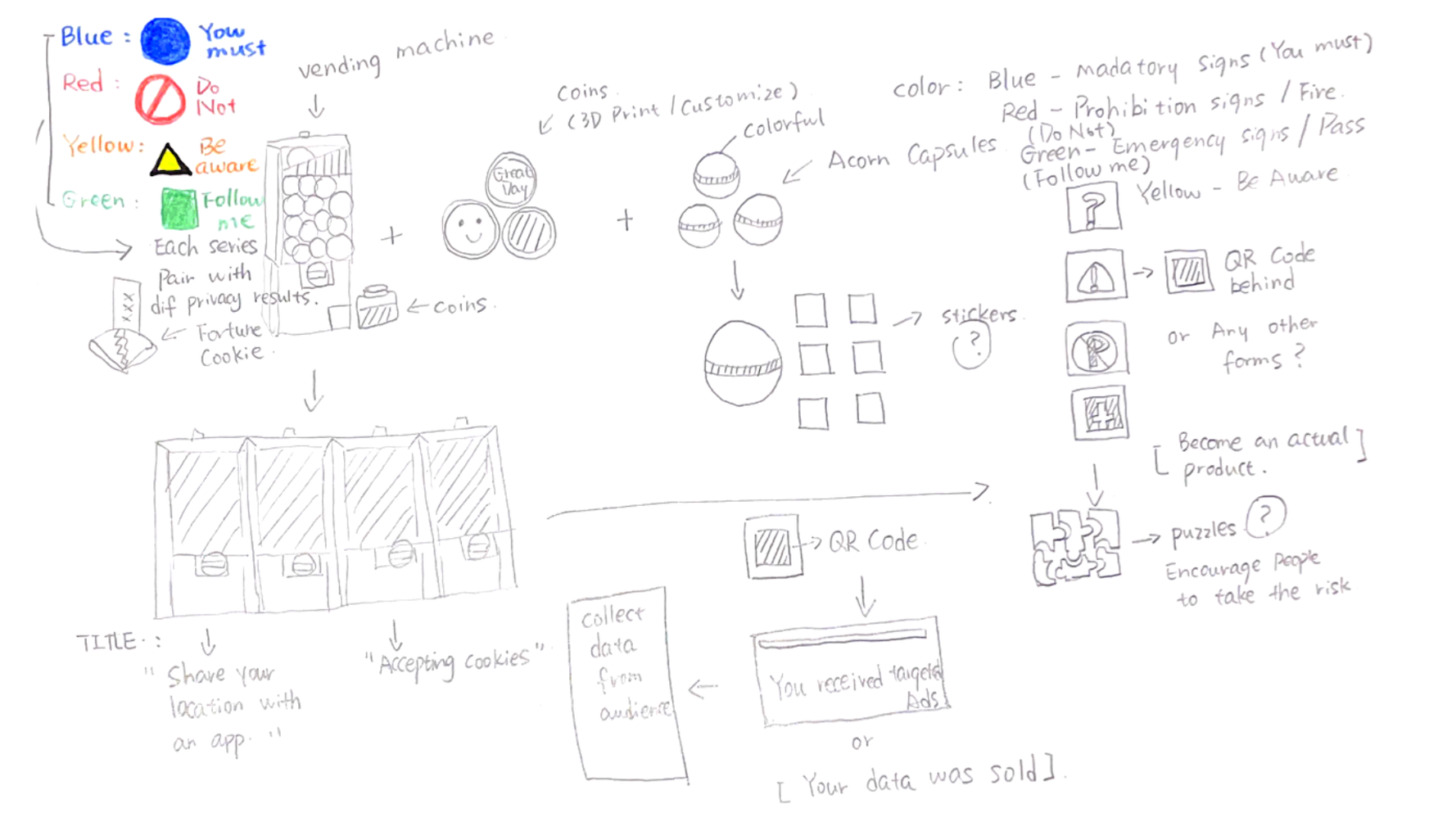
Setting of Interactive Installation/ Rules
a. Four Gashapon machines in total, each got one simulated scene title.
b. Each capsule contains a tangible item with a sticker describing where a risk arises in the real world (different series of signs).
c. Participants decide whether they are willing to scan the QR code behind the sticker. After this movement, the immediate feedback on the choice will be displayed online.
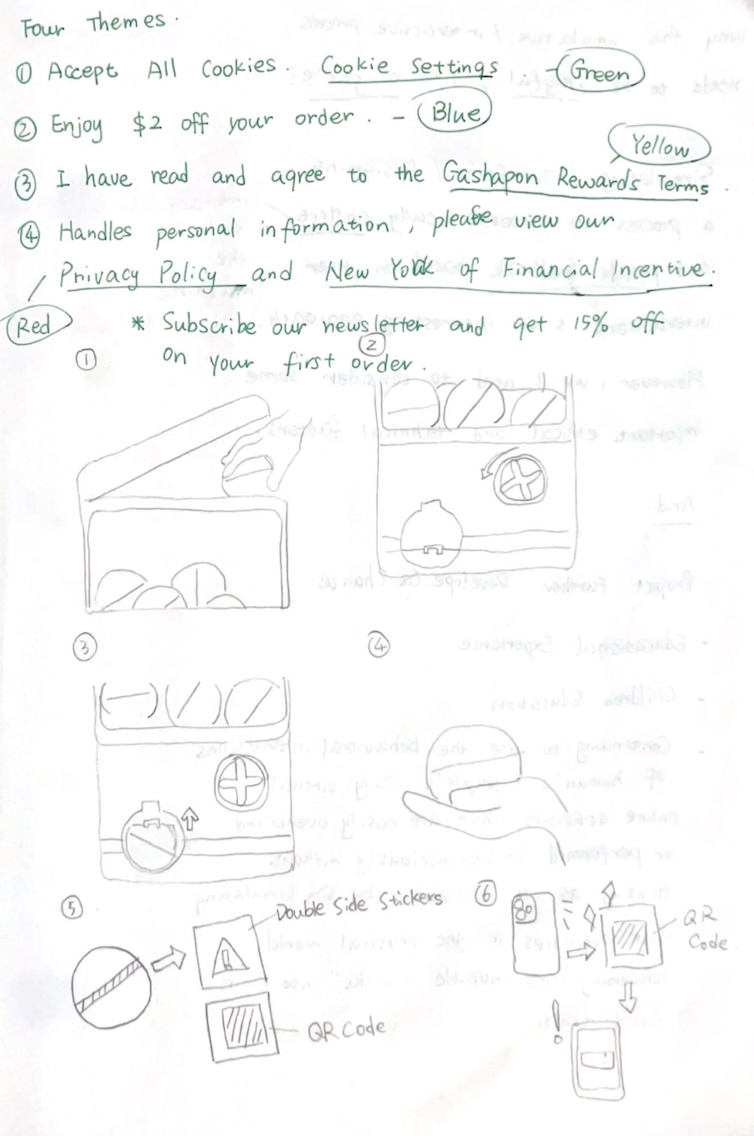
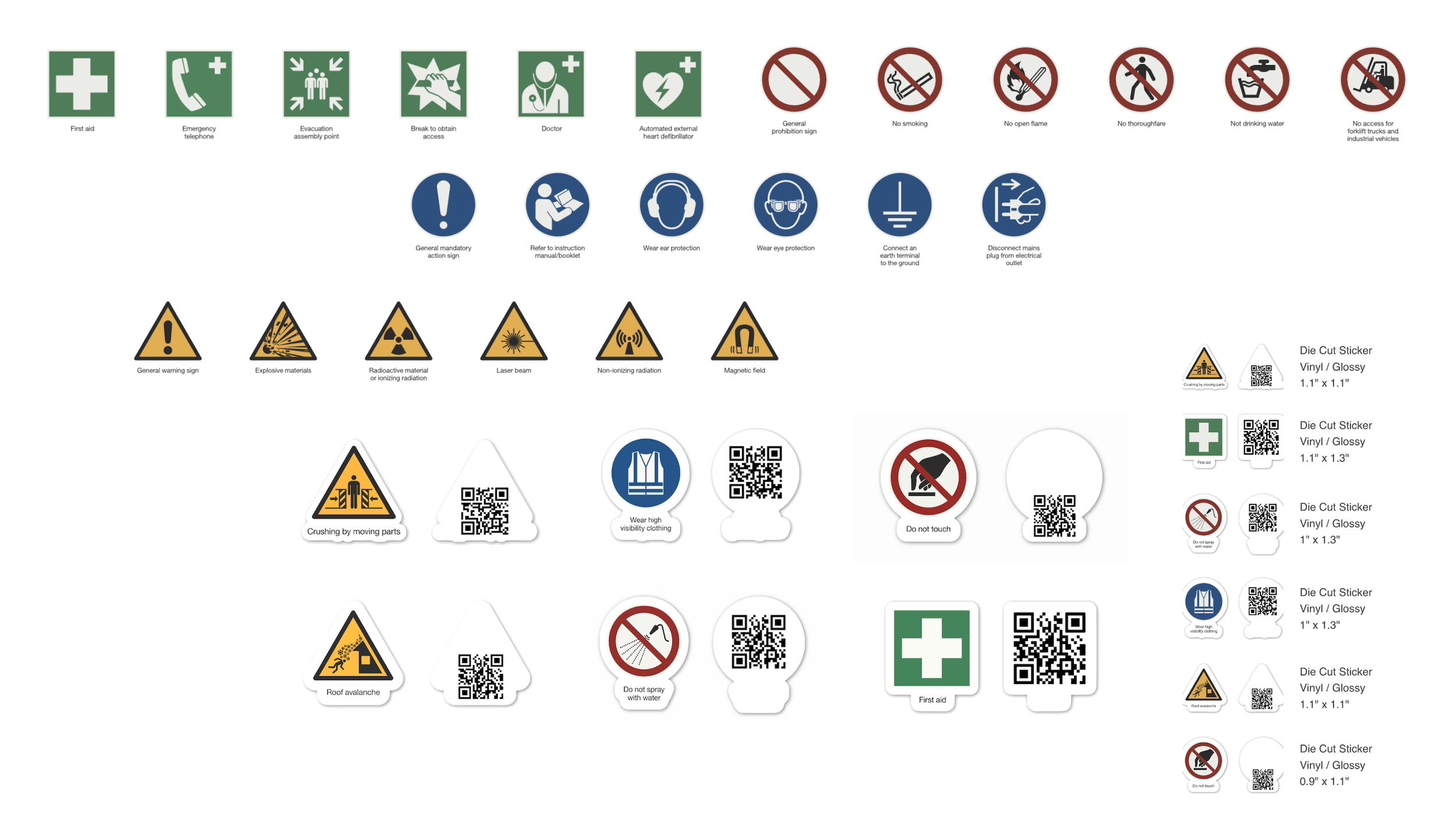
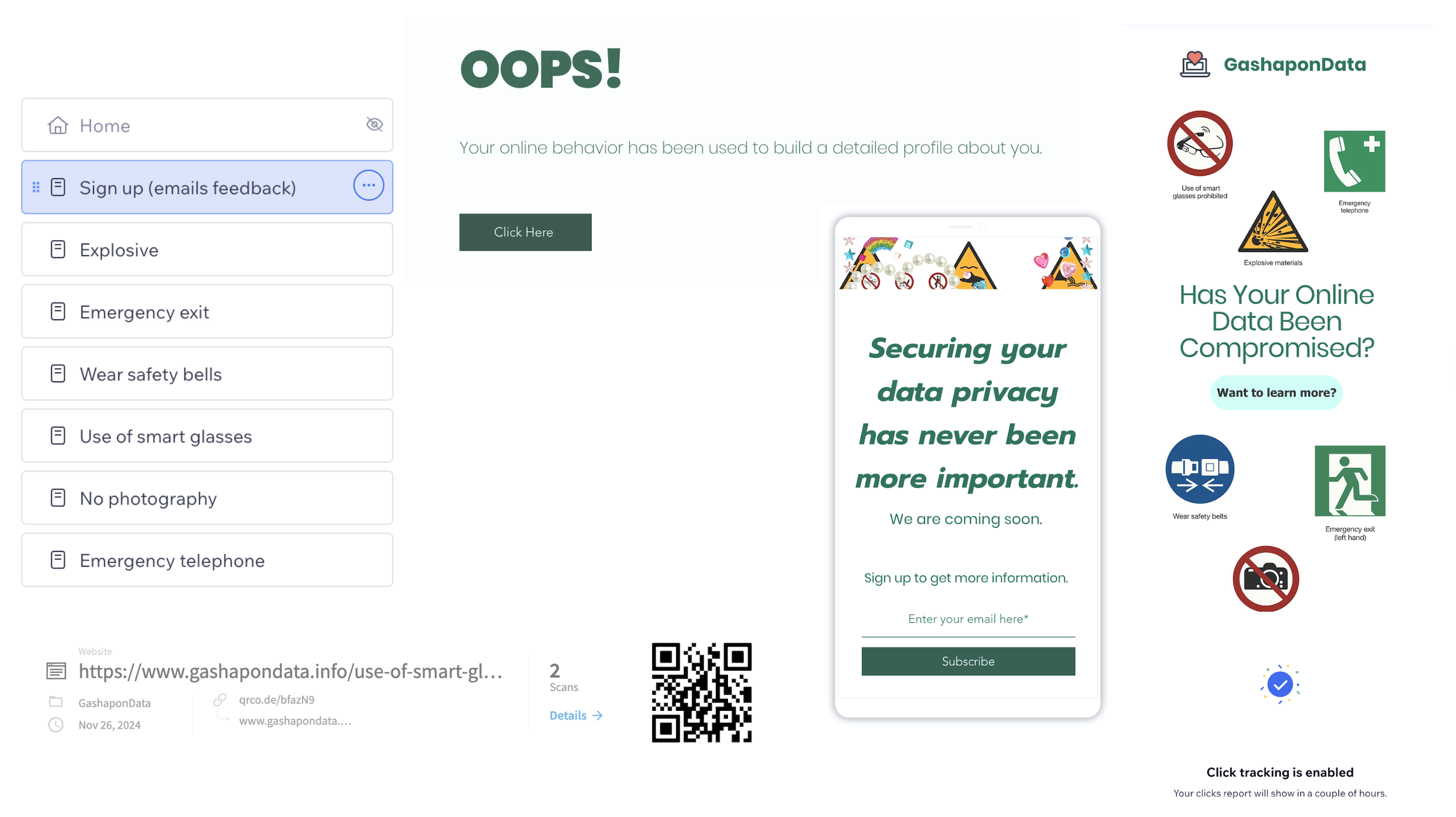
I developed a unified visual system that connects a playful physical interface: Gashapon capsules, with an intentionally “fake” website that echoes the choreography of online consent. I curated and edited both familiar and obscure safety symbols into a modular icon library, and subsequently converted that visual language into print-ready stickers and QR-linked web screens. Constructed on a strict grid, a precise typographic hierarchy, and a consistent logic of color and form (warning, prohibition, guidance), the experience renders “risk” as something readable, collectible, and oddly seductive, quietly revealing how everyday interfaces, like cookie banners, aestheticize consent and normalize exchanging privacy for convenience.