NATURE’S PLAYBOOK FOR INNOVATION
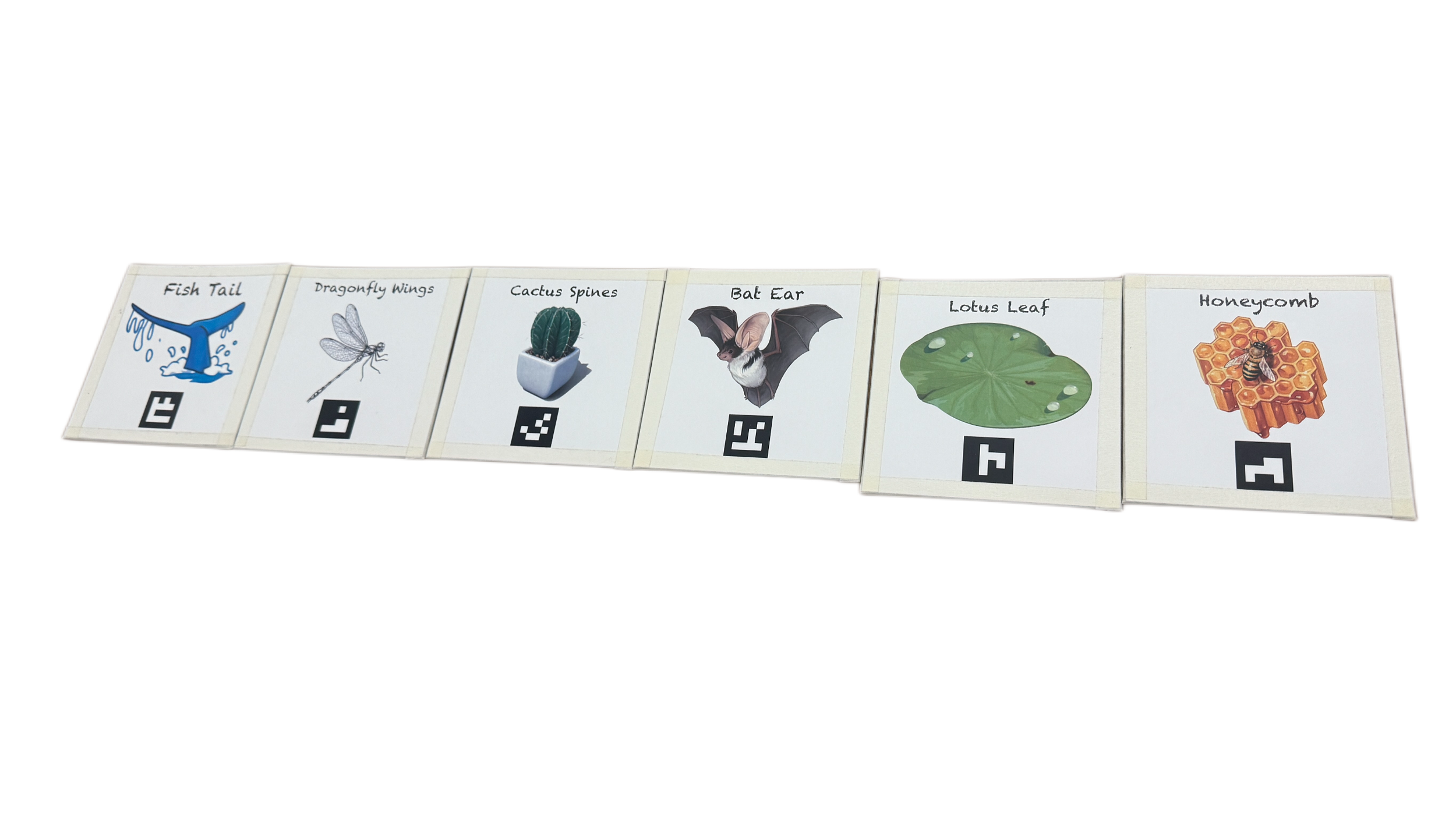
Nature’s Playbook for Innovation is a collaborative museum prototyping project developed at Parsons School of Design in partnership with the Museum of Science, Boston, and created for the F.A.S.T. Interactive Table within the broader theme “Evolution of Science.” In designing the full interactive screen experience for our quick, hands-on find-and-match tabletop game, our team (with Joanna Huang and Rex Jiang, my teammates) built the project end-to-end—from early game scripting and narrative flow, to Unity implementation and interaction logic, to final on-site playtesting and iterative calibration. We set up physical pucks and linked human inventions to the natural structures that inspired them, introducing biomimicry through close observation and playful iteration. The interface system uses an “object investigation” layout optimized for quick scanning in a busy gallery, while supporting rich media (photos/video) and clear, accessible takeaways. Through playtesting, we refined the flow to be immediately understandable and rewarding across age groups.
WHAT WORKED
The game flow was very simple and direct. During user testing, at least three groups told us they liked how quickly they could understand the rules and start playing.
Accessibility potential: An older visitor thanked us and shared that she had worked with autistic children for many years. She noted that a clear, structured matching game like this could be something they would genuinely enjoy.
Reward visuals were immersive for kids: After correct answers, the large visuals—images, videos, and pattern screens—held children’s attention and made them excited to continue.
Hands-on interaction worked well: Picking up and placing the physical pucks made the experience feel like a real tabletop game, not just a digital screen.